



Anikeade Funke-Treasure
The Sanitary Pad Media Campaign (SPMC) has called for the deliberate inclusion of boys and young men in menstrual health conversations, stressing that efforts to build a more informed, empathetic and supportive society must begin with ensuring that boys understand menstruation from an early age.
The call was made on Friday during an India–Nigeria webinar titled, “Including Boys in Menstrual Health Conversations: The Indian–Nigerian Conversation,” organised by the Sanitary Pad Media Campaign.
The webinar brought together public health professionals, advocates, educators and psychologists from Nigeria and India to examine the consequences of excluding boys from menstrual health education and the need to create spaces where menstruation can be discussed without shame, stigma or misinformation.
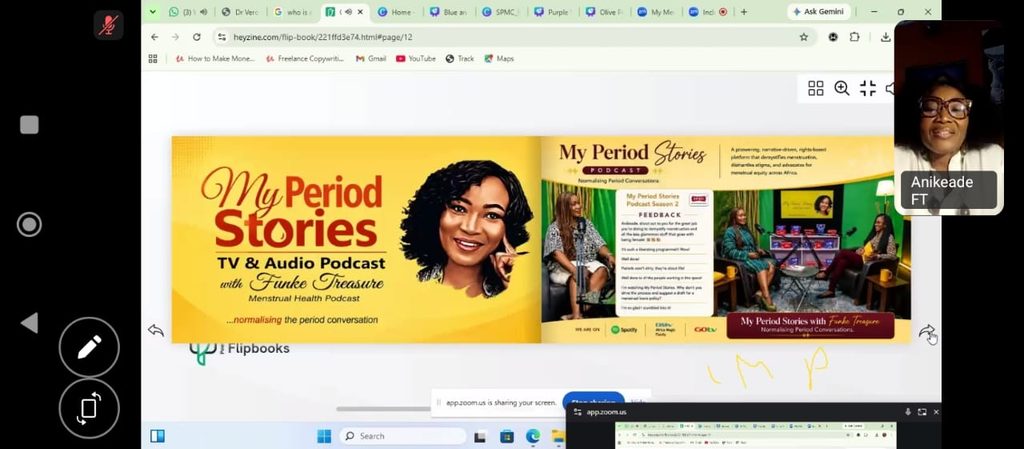
The Special Guest of Honour, Dr. Vera Ngozi Osokoya, Editor-in-Chief of Pioneer Progressive Herald Magazine, France, described the subject as a critical conversation, noting that excluding boys from menstrual health discussions breeds ignorance, stigma and shame.
Speaking during the webinar, the Convener of the Sanitary Pad Media Campaign, Anikeade Funke-Treasure, described menstrual health as a family issue and stressed the importance of creating behavioural change from the bottom up.
“Menstrual health is family health. Without proper menstrual well-being, the foundation for creating a sustainable family life will be faulty and challenging,” she said.
Funke-Treasure said meaningful change must begin with individuals and extend to families and communities before reaching institutions and decision-makers.
According to her, a bottom-to-top approach is necessary to create the behavioural change required to improve menstrual health and menstrual dignity.
Public Health Researcher, Dr. Sagarika Limaye of India, said the exclusion of boys from menstrual health education unintentionally reinforces the culture of secrecy surrounding menstruation.
“When menstrual health sessions are conducted, boys are left out and this unintentionally teaches girls that periods should be hidden from boys and leaves boys uninformed,” she said.
Limaye added that the inclusion of boys is important because menstruators do not live separately from non-menstruators.
“Menstruators don’t live separately from non-menstruators. Boys grow up as brothers, friends, classmates, colleagues, partners, dads and community members,” she said.
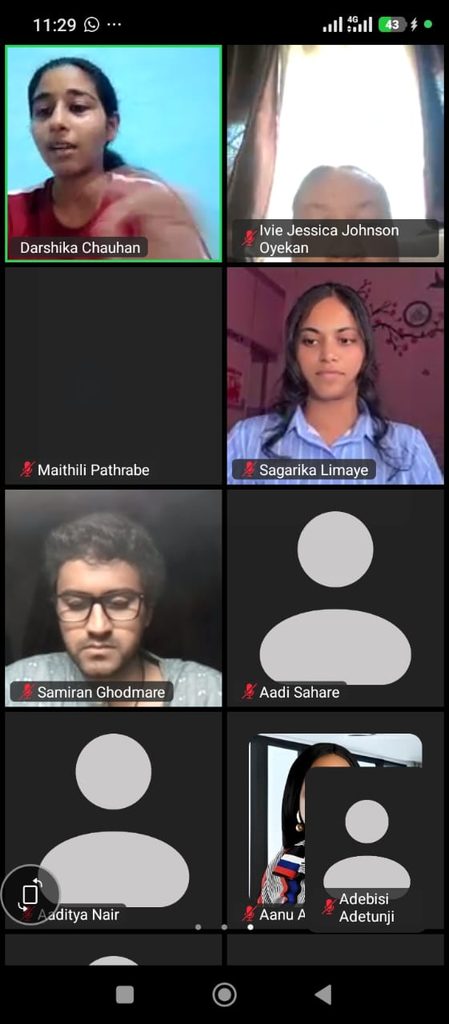
Cross section of some of the participants during the webinar.
Also speaking, Mrs. Funmi Olorunmola, Programme Coordinator of the Citizens Participation Advancement and Awareness Initiative (CPAAI), said educating men and boys could transform them from gatekeepers into advocates and facilitators of change.
“When men are educated, they become advocates, breaking period poverty and transforming them from gatekeepers into facilitators of change. To empower a girl, we must also educate the world around her,” she said.
She added: “A girl’s dignity is shaped not only by what she knows but also by how the males around her respond.”
Counsellor and Psychologist, Samiran Ghodmare of India, said social expectations and character traits traditionally assigned to boys often leave them uninformed and ill-prepared to engage with menstrual health issues.
“We all need to rethink. We need to be more mindful and more inclusive to break the cycle of excluding boys from menstrual health conversations,” he said.
Among the key issues highlighted during the conversation was the need to engage boys early with accurate and age-appropriate information about menstruation; create safe spaces for conversations within families, schools and communities; challenge stigma and misinformation; and strengthen menstrual health education as part of a broader approach to health, dignity and gender equality.
The speakers agreed that menstrual health education should not be restricted to girls, noting that the attitudes boys develop while growing up can influence how they respond to menstruators as brothers, friends, classmates, partners, husbands, fathers, colleagues, supervisors, human resource professionals and leaders.
SPMC therefore called on parents, educators, policymakers, media organisations, youth-focused organisations and community leaders to deliberately include boys in menstrual health education.
The organisation stressed that early engagement is essential to building a society where menstruation is understood rather than stigmatised and where supporting menstrual dignity becomes a shared responsibility.
The webinar is the second virtual conversation organised by SPMC within the last year. The first focused on confidence building for girls as part of the organisation’s continued efforts to expand conversations around the health, dignity and well-being of girls and women.
About the Sanitary Pad Media Campaign
The Sanitary Pad Media Campaign (SPMC) uses media, storytelling, advocacy and public engagement to promote informed conversations around menstrual health and advance menstrual dignity.
Through its programmes and partnerships, SPMC works to challenge menstrual stigma, amplify lived experiences and create spaces where menstrual health can be discussed openly and constructively.